Your Munich Weekend, Sorted.

Send this to the rest of your group
fk-munich-guide.pages.devBeer Gardens & Green Spaces
 Photo: Chris Light, CC BY-SA 4.0
Augustiner Biergarten
The classic. Huge chestnut-shaded garden, Munich's oldest brewery. Self-service side is cheaper — grab your own Maß and a pretzel.
Open in Maps → Photo: Berlinuno, CC BY-SA 4.0
Augustiner Bräustuben
Right inside the actual Augustiner brewery on Landsberger Straße, since 1886 — a proper Münchner regulars' spot, not a tourist crowd. Close to Theresienwiese, the Oktoberfest grounds. It has a small roof terrace overlooking the brewery courtyard — ask for a table there.
Open in Maps → Photo: Bayreuth2009, CC BY 3.0
Hofbräuhaus
The famous one — since 1589, oompah bands, huge beer hall, always packed with tourists. Worth a walk-through just to see it. But honestly: with good weather, don't waste a sit-down meal here — walk through, then go find a real beer garden instead.
Open in Maps →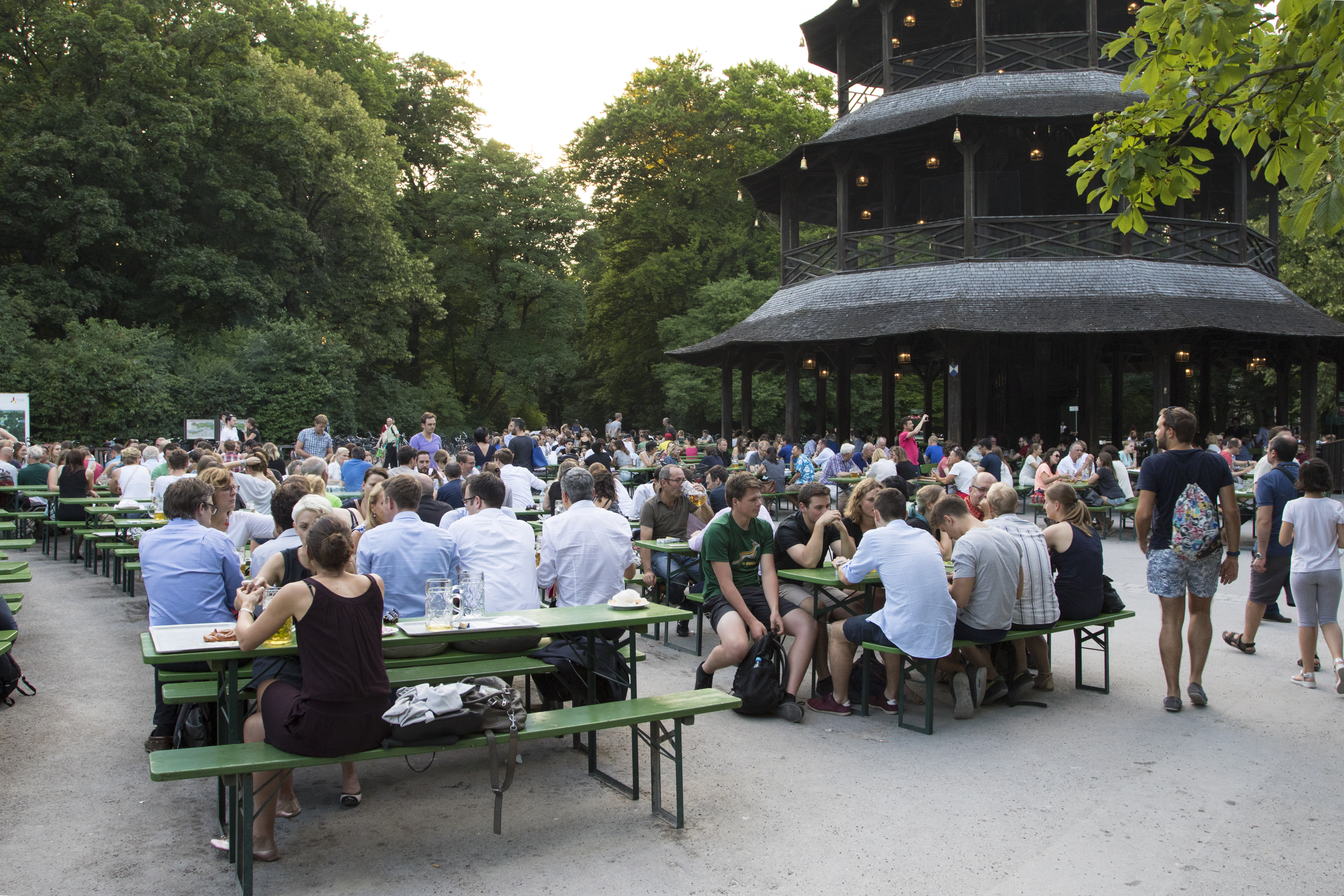 Photo: AxelCruise, CC BY-SA 4.0
Chinesischer Turm Biergarten
Beer garden right under the Chinese Tower in the English Garden, oompah band plays from the tower on weekends.
Open in Maps →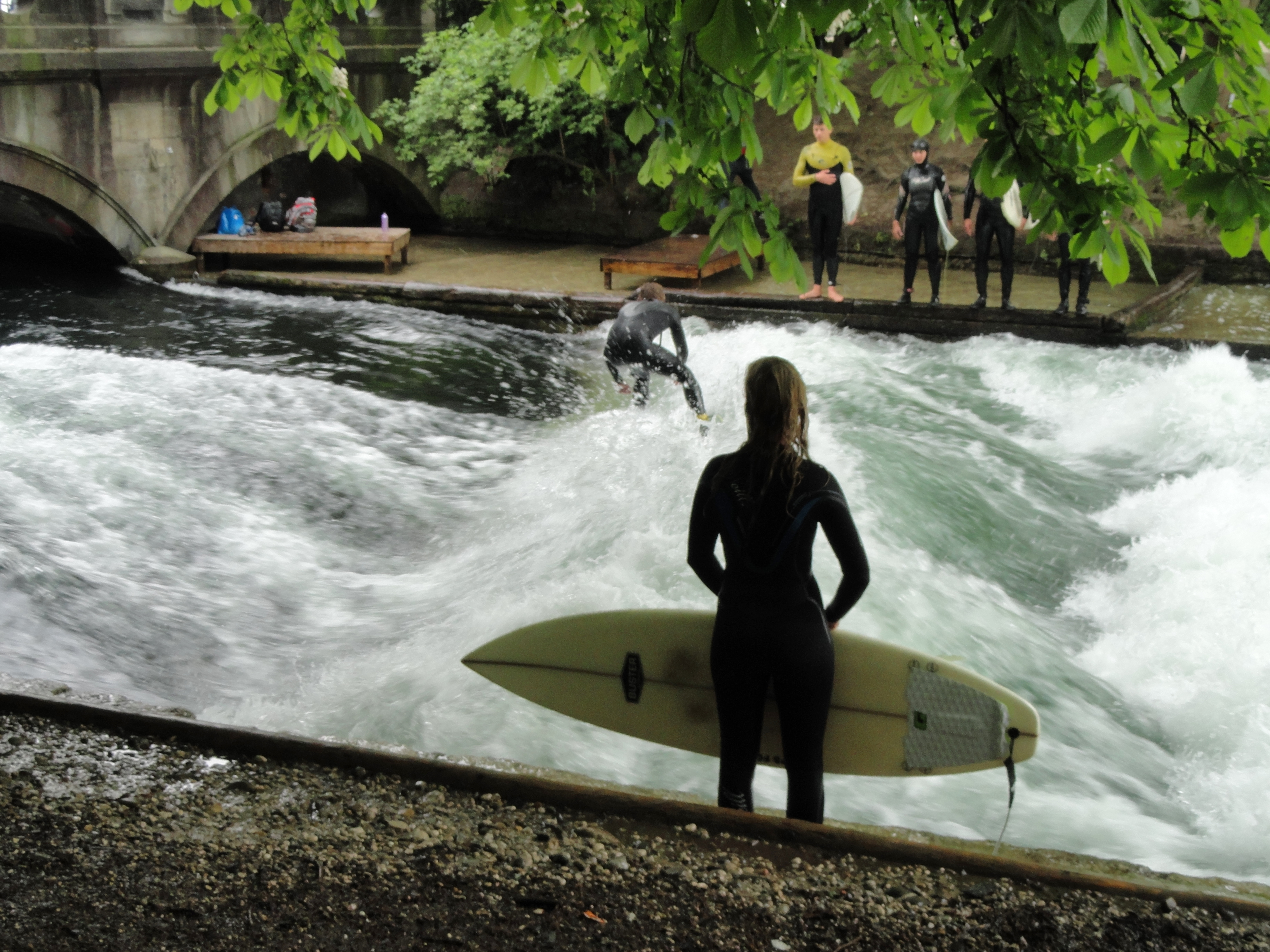
English Garden / Swimming
Bigger than Central Park. Rent a bike, or just find a patch of grass by the Eisbach and jump in with everyone else. Before you do, stop at the Eisbach Welle near Prinzregentenstraße — a standing wave where surfers queue up to ride the current, city surfing right in the middle of the park.
Open in Maps →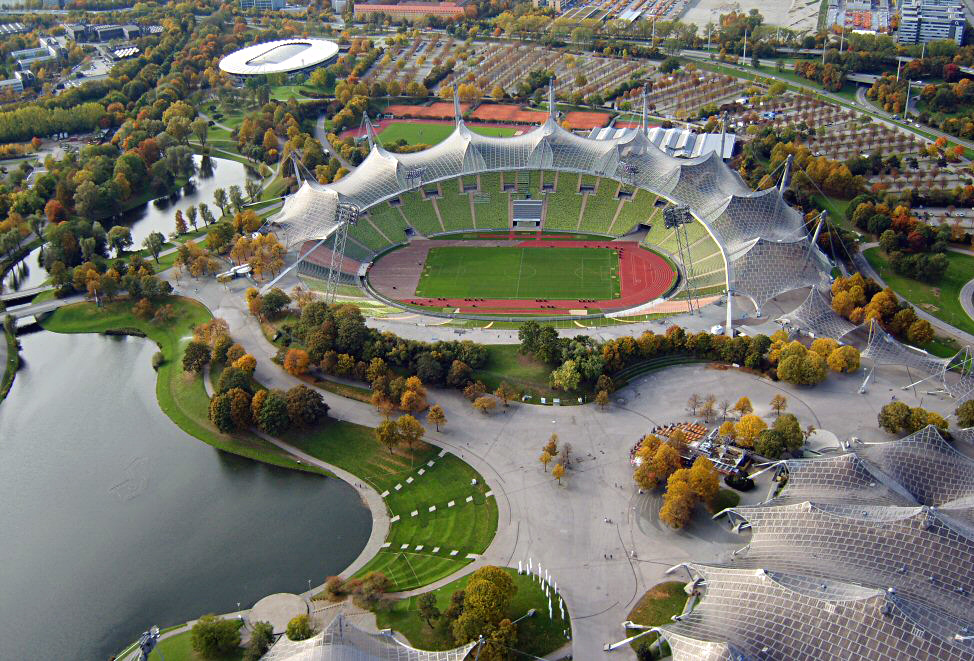
Olympiapark + Tollwood
1972 Olympic grounds — great skyline view from the hill, and the tent-roof stadium is worth seeing even from ground level.
The Isar, Golden Hour
 Photo: Burkhard Mücke, CC BY-SA 4.0
Beers by the river
Buy a few bottles at the kiosk by Reichenbachbrücke, cross the bridge, and go right along the riverbank. Sit down anywhere — Munich in summer basically parties on the gravel banks of the Isar.
Day Trip: Zugspitze & Partnachklamm
 Photo: Andreas Lippold, CC BY-SA 4.0
Zugspitze — Germany's Highest Peak
Cogwheel train or cable car straight up from Garmisch-Partenkirchen to 2,962m — glacier views into three countries on a clear day. Same base town as Partnachklamm, so it's easy to combine both in one long day.
 Photo: Pixelwuwu, CC BY-SA 4.0
Partnachklamm — Garmisch-Partenkirchen
A narrow gorge blasted into the cliffside with the Partnach river roaring right below the walkway — ice-cold spray, waterfalls overhead. Genuinely refreshing on a hot day, and one of the best half-day trips out of Munich.
Munich & the Third Reich
The Nazis called Munich the "Hauptstadt der Bewegung" — capital of the movement. The party was founded here, its failed 1923 coup happened here, and a lot of the sites are still standing, unmarked, inside completely normal city blocks. Worth knowing before you walk past them.
Prefer a guide? Book the tour.
Radius Tours runs a well-regarded ~2.5–3hr walking tour covering exactly this ground. Book ahead, it fills up.
radiustours.com →Sterneckerbräu — Tal 38
The beer hall where a 30-year-old Hitler gave his first speech to the German Workers' Party in October 1919, the small group that became the NSDAP. The building's still there, a few minutes from Marienplatz.
Open in Maps →Königsplatz
The Nazis' ceremonial square: two "Temples of Honor" once stood here for the party members killed in the 1923 putsch, flanked by the NSDAP's headquarters (the "Brown House") and the Führerbau, where the 1938 Munich Agreement was signed. Students burned books here in May 1933.
Open in Maps →NS-Dokumentationszentrum — Brienner Str. 34
 Photo: Raimond Spekking, CC BY-SA 4.0
Built on the ruins of the Brown House. If you only make one stop, make it this one — a clear-eyed museum on exactly how Munich became the movement's birthplace.
Small entry fee, allow 1.5–2 hours. Open in Maps →Odeonsplatz & the Feldherrnhalle
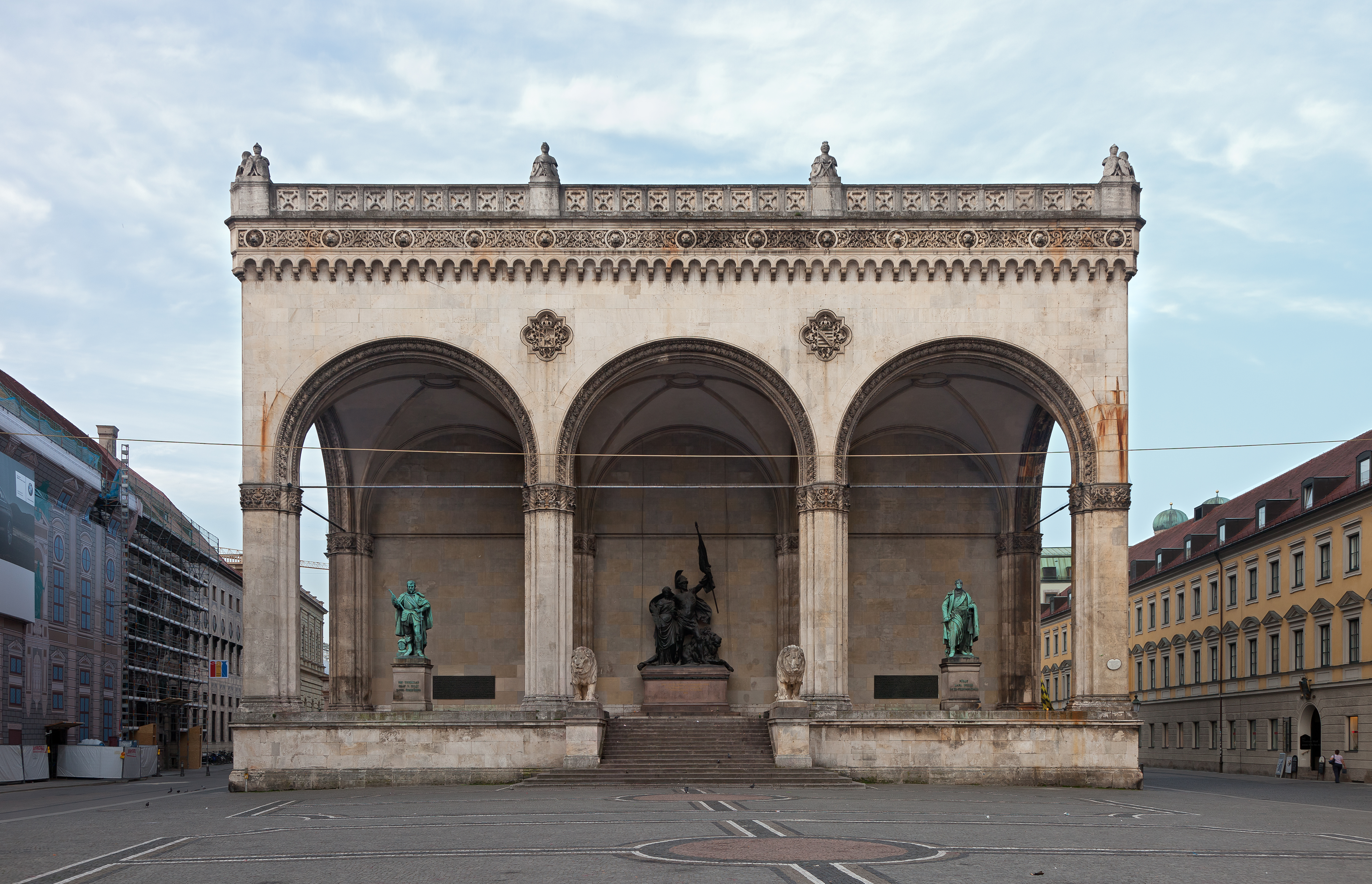 Photo: Thomas Wolf, www.foto-tw.de, CC BY-SA 3.0 DE
Where the 1923 Beer Hall Putsch was stopped by police gunfire — 16 Nazis and 4 officers killed. Under Nazi rule, everyone passing the memorial here had to give the salute; many ducked down the side street instead. Look down: the line of cobblestones through Viscardigasse still traces their escape route.
Open in Maps →Geschwister-Scholl-Platz — LMU main building
 Photo: Nicoasc, CC BY-SA 4.0
This is where Sophie and Hans Scholl of the White Rose group scattered anti-Nazi leaflets in February 1943. They were caught within days and executed. Replica leaflets are set into the pavement outside the entrance.
Open in Maps →Jüdisches Museum München — St.-Jakobs-Platz
 Photo: H-stt, CC BY-SA 4.0
End here, on more than just persecution. A short walk from Marienplatz, this covers Jewish life in Munich before, during, and after the Nazi period — a fuller picture than the rest of the walk alone gives you. Small, well-curated, easy to fit in.
Tue–Sun 10am–6pm, closed Mondays. €6, free under 18. Open in Maps →KZ Dachau Memorial Site
 Photo: Adam Jones, CC BY-SA 3.0
This is where it started: the first Nazi concentration camp, opened in March 1933, and the model for every camp that followed. It's now a memorial and museum on the original site — free to enter, and genuinely one of the most important places you can visit in Germany. Give it a full half-day.
Order This Beer
Eat This
 Photo: Nemracc, CC BY-SA 4.0
Brezn & Obatzda
The beer garden default starter. Obatzda is a camembert-based cheese spread mashed with butter, onion, and paprika — order it with a fresh Brezn to scoop it up and share, the second you sit down, before anything else arrives.

Halbes Hendl
Half a roast chicken, crispy skin, usually with a side of potato salad — another beer garden classic and a lighter order than the Haxe if you want something you can actually finish.
 Photo: Benreis, CC BY-SA 3.0
Schweinshaxe mit Knödeln
Roast pork knuckle, crackling skin, potato dumplings — the heavyweight order.
 Photo: Bbb-Commons, CC BY-SA 3.0
Steckerlfisch
Whole fish grilled on a stick — get it fresh at any beer garden grill stand.
 Photo: Sandstein, CC BY 3.0
Weißwurst Frühstück
White sausage breakfast — before noon only, peel the skin off, sweet mustard, pretzel. Order a Weißbier (wheat beer) alongside the sausages — it's the traditional pairing, not just a beer garden habit.
 Photo: AleGranholm, CC BY 2.0
Döner
Not actually Bavarian — it's Turkish-German, invented by Turkish immigrants in Berlin in the 1970s, and now the single most-sold fast food in the whole country, more than currywurst or burgers. A genuine must-try.
 Photo: Kobako, CC BY-SA 2.5
Leberkässemmel
Meatloaf-style slab, sliced and served hot on a fresh Semmel roll — the everyday snack every bakery counter sells.
 Photo: Benreis, CC BY-SA 4.0
Auszogne (Bavarian fried dough)
Yeast dough fried crisp in hot lard, dusted with sugar — a genuine Munich institution, not a tourist gimmick.
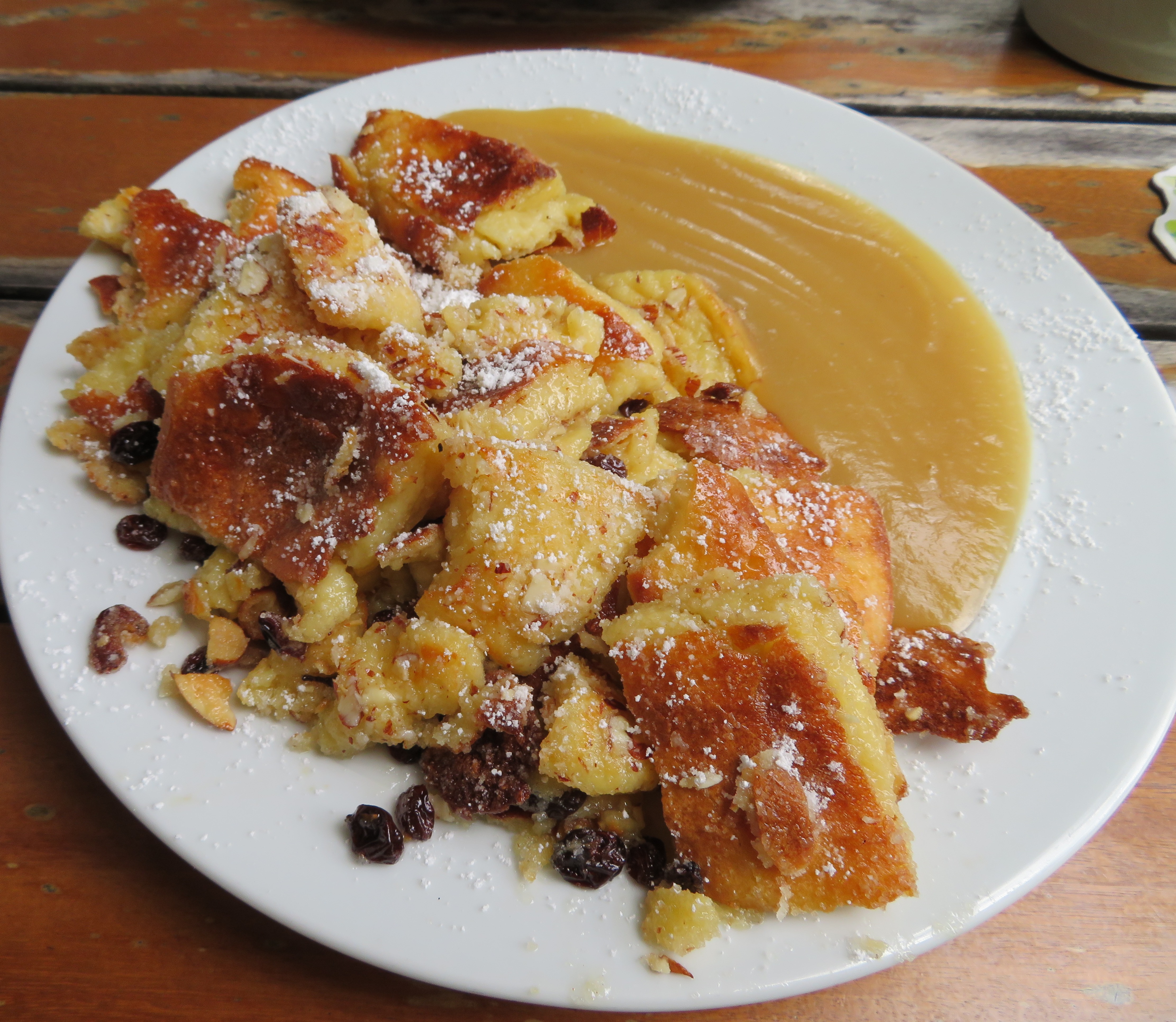 Photo: Xocolatl, CC BY-SA 4.0
Kaiserschmarrn
A torn, caramelized pancake dusted with sugar, served with apple sauce or fruit compote — order it as dessert, or as the whole meal, nobody will judge you.
 Photo: Andreas Praefcke, CC BY 3.0
Apfelstrudel
Thin pastry, spiced apple filling, served warm with vanilla sauce — a coffeehouse classic, not just a beer garden dessert.
Ice Cream Break
Bayerische Eismanufaktur
Right by the English Garden — grab a cone and walk it into the park. Handmade, small-batch flavors.
Open in Maps →True & 12
Tiny spot near the Deutsches Museum, a short walk from the Isar — only ever twelve flavors on offer, all excellent, all made with fresh organic milk.
Open in Maps →Ballabeni
City-center pick, close to Marienplatz — good option after the Döner or on the way back from a history-tour stop.
Open in Maps →Where to Go Out
Gärtnerplatz & Glockenbachviertel
Munich's most-loved going-out neighborhood: bars around the round Gärtnerplatz square, packed terraces in summer, mixed low-key-to-lively. Good starting point for a night, easy to bar-hop.
Open in Maps →Schwabing
The old student quarter by the English Garden. Wedekindplatz is the center of it — ringed with bars, more laid-back than downtown.
Open in Maps →Rote Sonne
A genuine Munich institution — one of Germany's best-known electronic/techno clubs, running since the early 2000s. No cameras, no fuss, just a serious dance floor. Not something you'll find a version of back home.
Open in Maps →Blitz Club
Underground techno club near Sendlinger Tor, part of the same central "club axis." Strict, minimal-hype door — dress down, not up.
Open in Maps →Good to Know
- Bring your own food and drinks to a beer garden — legal and normal, as long as you sit at the unserved "self-service" tables (no tablecloth) and buy your beer from the counter.
- Sit down with strangers — beer garden tables are shared. Join a table with a group of locals if there's space; people are usually open and friendly, and it's one of the best ways to get the real Munich experience.
- Weißwurst has a noon rule — traditionally never eaten past midday. Order it for breakfast, not dinner.
- Leave no trace on the Isar — bring a bag for your bottles and trash. Munich takes river cleanliness seriously and it's a big part of why it stays so nice.
- Prost, not cheers — look people in the eye when you clink glasses, or it's seven years of bad luck (or so they'll tell you).
- Get the MVV app — buy tickets for the U-Bahn, S-Bahn, trams, and buses right on your phone. Public transit here is excellent — skip Uber. Munich's also small enough that walking gets you most places, and renting an e-scooter is an easy option for the rest.
- Supermarkets close early and skip Sunday entirely — most shut around 8pm on weekdays, and almost everything is closed on Sundays by law. Stock up the day before if you need something.
- Carry a bit of cash — plenty of small places, kiosks, and market stalls still don't take cards.
- Tap water is excellent here — genuinely good, safe, cold from the tap. No need to buy bottled water.
Fun Facts, Since You're American
- Munich's sister city is Cincinnati, Ohio — the relationship dates to 1853, when a Munich mission society supported Cincinnati's Catholic community. Downtown Cincinnati's landmark Tyler Davidson Fountain was actually cast in Munich and shipped over in 1871. Official sister-city status since 1989.
- Cold War American radio was broadcast from right here — Radio Free Europe/Radio Liberty, U.S.-funded stations beaming news into the Soviet bloc in over 20 languages, were headquartered on the edge of the English Garden — the same park you'll be walking through. The Soviets reportedly called Munich the "capital of enemy emigration" because of it.
- Levi Strauss was Bavarian — the founder of Levi's jeans was born in Buttenheim, about two hours north of Munich, before emigrating to the US in the 1840s.
- "Munich" became American political shorthand — the 1938 Munich Agreement, signed at the Führerbau you'll pass on the history walk, is why U.S. politicians still invoke "another Munich" to mean disastrous appeasement.